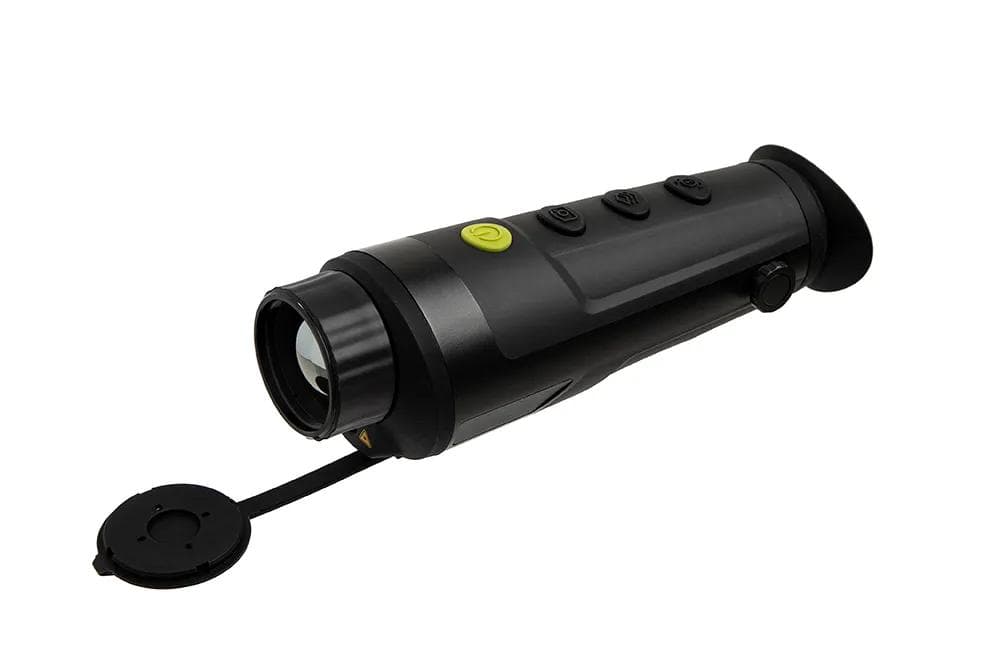
Thermal scopes, gaining popularity among hunters, law enforcement, and outdoor enthusiasts, detect heat signatures instead of relying on visible light. A frequent question arises: Can you use a thermal scope during the day? The answer is yes. To fully understand this, it’s important to explore how thermal scopes function and differ from other optical devices.
What is A Thermal Scope, And How Does It Work?
A thermal scope is an advanced optical device that detects infrared radiation emitted by objects and converts it into a visible image. Unlike traditional scopes that rely on reflected light, thermal scopes operate based on temperature differences. Warmer objects, such as animals or humans, appear as bright or distinct figures against cooler backgrounds, making them incredibly useful in various scenarios, including hunting and security applications. Many enthusiasts looking at thermal scopes for sale search for models with high-resolution imaging and long detection ranges.
How Does A Thermal Scope Differ From A Night Vision Scope?
A common misconception is that thermal and night vision scopes serve the same purpose. While both optimize visibility in low-light conditions, they function quite differently. Night vision scopes amplify available light, such as moonlight or infrared illumination, to create a clearer image. However, they struggle in complete darkness. On the other hand, thermal scopes don’t require ambient light. They detect heat, meaning they can function equally well in total darkness, fog, or even through light vegetation.
Can You Use a Thermal Scope During the Day?
Yes, you may be surprised to know that thermal scopes are fully operational in daylight! Unlike night vision, which can be damaged or rendered ineffective in bright light, thermal scopes function based on temperature differences, which remain consistent regardless of the time of day. This makes them useful for daytime hunting, search-and-rescue operations, and industrial inspections. However, during the day, the contrast between objects may be less dramatic since sunlight can heat surfaces uniformly, making it slightly harder to distinguish targets compared to nighttime use.
Can Thermal Scopes Be Used in All Weather Conditions?
Thermal scopes are highly effective in most weather conditions, but some elements can impact their performance. Fog, rain, and snow can limit the clarity of the thermal image due to the moisture in the air absorbing infrared radiation. However, unlike traditional optics, which struggle in low-light or obscured environments, thermal scopes still provide a significant advantage by highlighting heat sources even in challenging conditions. That said, you wouldn’t get much use out of them in extreme heat, which can often make it harder to distinguish objects if everything radiates at similar temperatures.
How Accurate Are Thermal Scopes Compared to Traditional Optics?
Thermal scopes offer excellent target detection capabilities, but their accuracy depends on the application. Compared to traditional optics, which provide clear, detailed images, thermal scopes sometimes lack fine details and depth perception. This makes them highly effective for spotting and tracking targets but slightly less precise for identifying small details at long distances. Some high-end thermal scopes offer advanced reticles and zoom functions that enhance accuracy, making them a viable choice for hunters and tactical users. Many users also consider thermal scopes clip-on options, which allow them to attach thermal imaging capabilities to existing optics for added versatility.
How Do Thermal Scopes Perform in Daylight Versus Nighttime?
Thermal scopes work both day and night, but their effectiveness varies. At night, the contrast between heat-emitting objects and their surroundings is more pronounced, making detecting animals, people, or vehicles easier. During the day, the sun will warm up the environment, reducing contrast and making distinguishing objects slightly more challenging. However, many thermal scopes have different color palettes and contrast settings to optimize visibility regardless of the time of day.
Can Thermal Scopes Detect Heat Through Glass or Obstacles?
One significant limitation of thermal scopes is that they cannot detect heat through glass. Glass reflects infrared radiation instead of letting it pass through. Hence, a thermal scope typically displays a reflection rather than the heat signature behind it. Similarly, thermal imaging has difficulty penetrating thick obstacles such as walls or dense foliage, although it may detect some heat if the object is close enough to the surface. However, in open environments, thermal scopes excel at identifying heat sources that would remain invisible to the naked eye.
If you’re looking for top-of-the-line thermal or night vision equipment, look no further than GPNVGs. We offer the latest in imaging technology (including customizable options), a range of head/ear protection items, training courses, and discounts for first responders + military! Visit our products page and/or give us a call for more information.