Laser aiming devices have become essential tools for hunters, enhancing accuracy and improving targeting in various conditions. With numerous options available, selecting the right one can be challenging. This guide breaks down the key features, benefits, and types of hunting laser aiming devices to help you make an informed choice.
What Is a Hunting Laser, And How Does It Work?
Hunting lasers are sighting devices that project a laser beam to improve accuracy. Unlike rangefinders, which measure distance, laser sights help hunters align their shots more effectively by providing a visible aiming point. Some models also include angle compensation, making them useful in uneven terrain. It helps hunters know how far away their target is to make their shot more precise. Some hunting lasers also offer angle compensation for shooting at an angle and other features for different hunting conditions.
Benefits of Using a Laser for Hunting
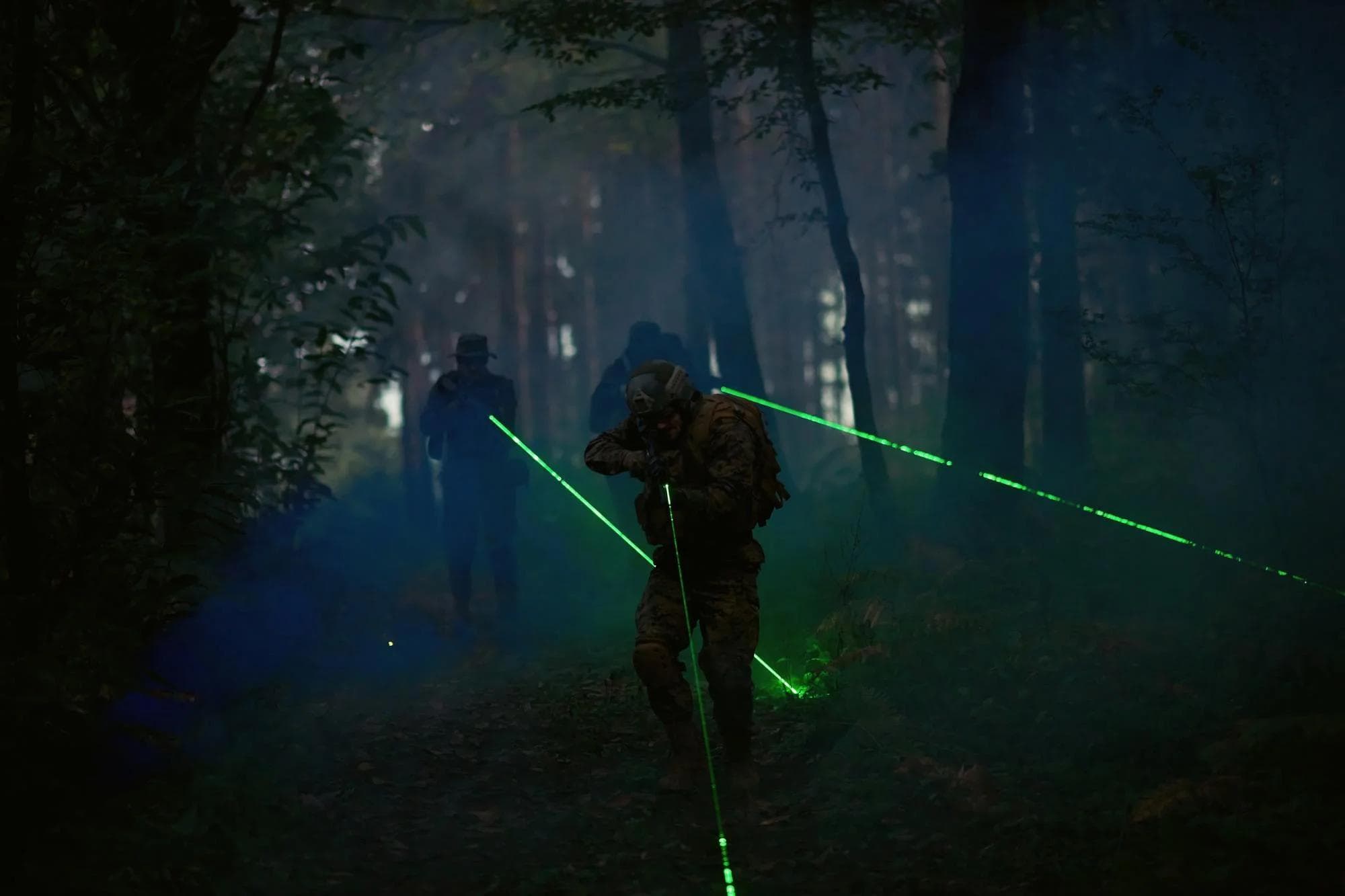
Hunting lasers offer several advantages that allow for more efficient hunting. For one thing, lasers are handy when it is darker outside, and your vision is limited. Many wonder, “Can you use a hunting laser in low-light conditions?” or “Are hunting lasers effective in dense forests?” Yes, and yes! The laser beams help you pinpoint your target more effectively and quickly with low visibility. Lasers are particularly effective in dense forests, heavy brush, and low-light conditions, where traditional sights may be harder to use.
Using a laser when hunting can also be helpful when your target is moving. The light makes it easier to follow your target to keep your eyes focused on where you are shooting. They also help maintain accuracy when shooting from challenging positions, such as behind cover or uneven terrain.

How to Choose the Right Laser for Hunting
Review some key features when selecting a hunting laser that works well for you.
Angle Compensation
For hunters in hilly or mountainous terrain, angle compensation adjusts for elevation differences, ensuring an accurate aim when shooting at a steep angle. It can be difficult to accurately measure the distance to your target from an uneven angle without angle compensation.
Ability to Perform in Severe Weather
Some hunting lasers feature water-resistant or weatherproof designs, allowing them to perform reliably in rain, snow, or fog. If you hunt in severe weather often, it is important to research how weather conditions affect hunting laser performance when selecting a laser.
Long Distance
Another key feature when picking a hunting laser is the maximum distance it can reach. Generally, the further the laser range, the easier it is to see your target. Long-range lasers improve targeting precision over greater distances and enhance visibility for close-range shots in low-light conditions.
Focus and Filtering Options
For long-range shooters, in particular, the option to focus on smaller targets can be beneficial to help filter out larger surrounding objects. Different lasers often offer different settings involving focus and filtering.
Red vs. Green Lasers
When selecting a hunting laser, the color of the laser beam is an important factor. Red lasers are more energy-efficient, offering a longer battery life and better performance in extreme temperatures. They are also more affordable, making them a popular choice. Green lasers, however, are significantly more visible in bright conditions and at longer distances, making them ideal for daylight hunting. While they tend to be more expensive and consume more power, their enhanced visibility can be a significant advantage in open environments.
Common Types of Laser Sights
- Underbarrel Lasers: These are ubiquitous, as they are very stable and will not get knocked out of place when you are on the move.
- Guide Rod Lasers: These lasers fit inside a semi-automatic pistol’s guide rod, aligning them closely with the barrel for precise aiming. They are highly durable but come at a higher price.
- Trigger-Guard Mounted Lasers: These can be a great option if your pistol does not have a rail mounting system. These are easy to install and are relatively inexpensive.
- Rear-Sight Lasers: These either attach to or replace the rear sights and are easy to turn on while hunting. They have an irregular shape, which some find distracting.
- Grip-Mounted Lasers: These lasers attach directly to the pistol grip and activate when you apply pressure. They are easy to use but can shift out of place with frequent handling.
Looking for the perfect hunting laser? GPNVGs offers high-quality laser sights tailored to your needs. Check our products page or contact us today for expert recommendations and to enhance your hunting precision!