Choosing between night vision and thermal technology is crucial when considering useful equipment for tactical operations, hunting, or security. Both have merits and limitations; understanding these differences can help determine which method of seeing in the dark best suits your needs.
In this detailed comparison, we’ll explore the differences between night vision and thermal devices, such as scopes and imaging, and answer the common question: What’s better thermal or night vision?
Night Vision Vs. Thermal
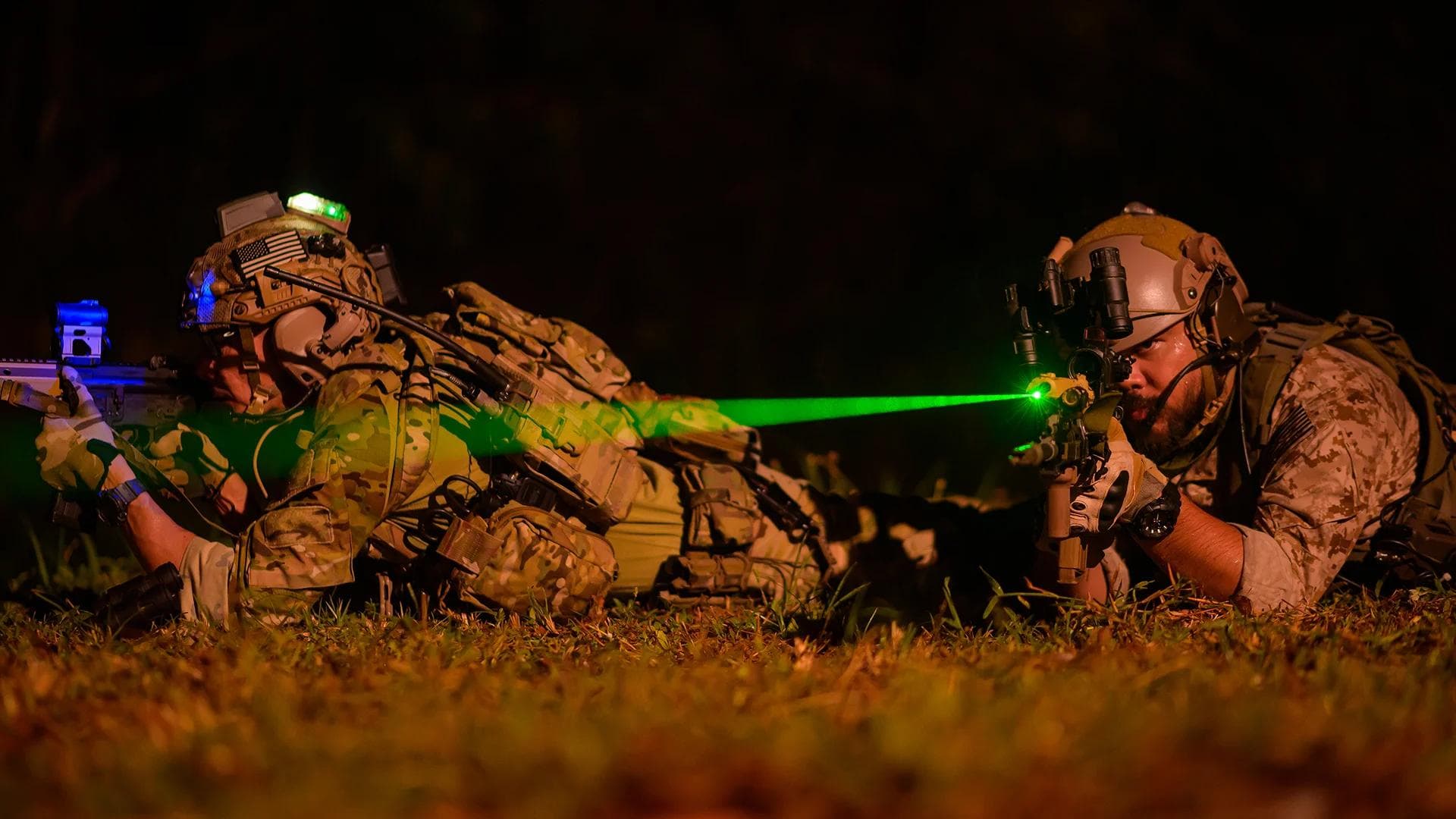
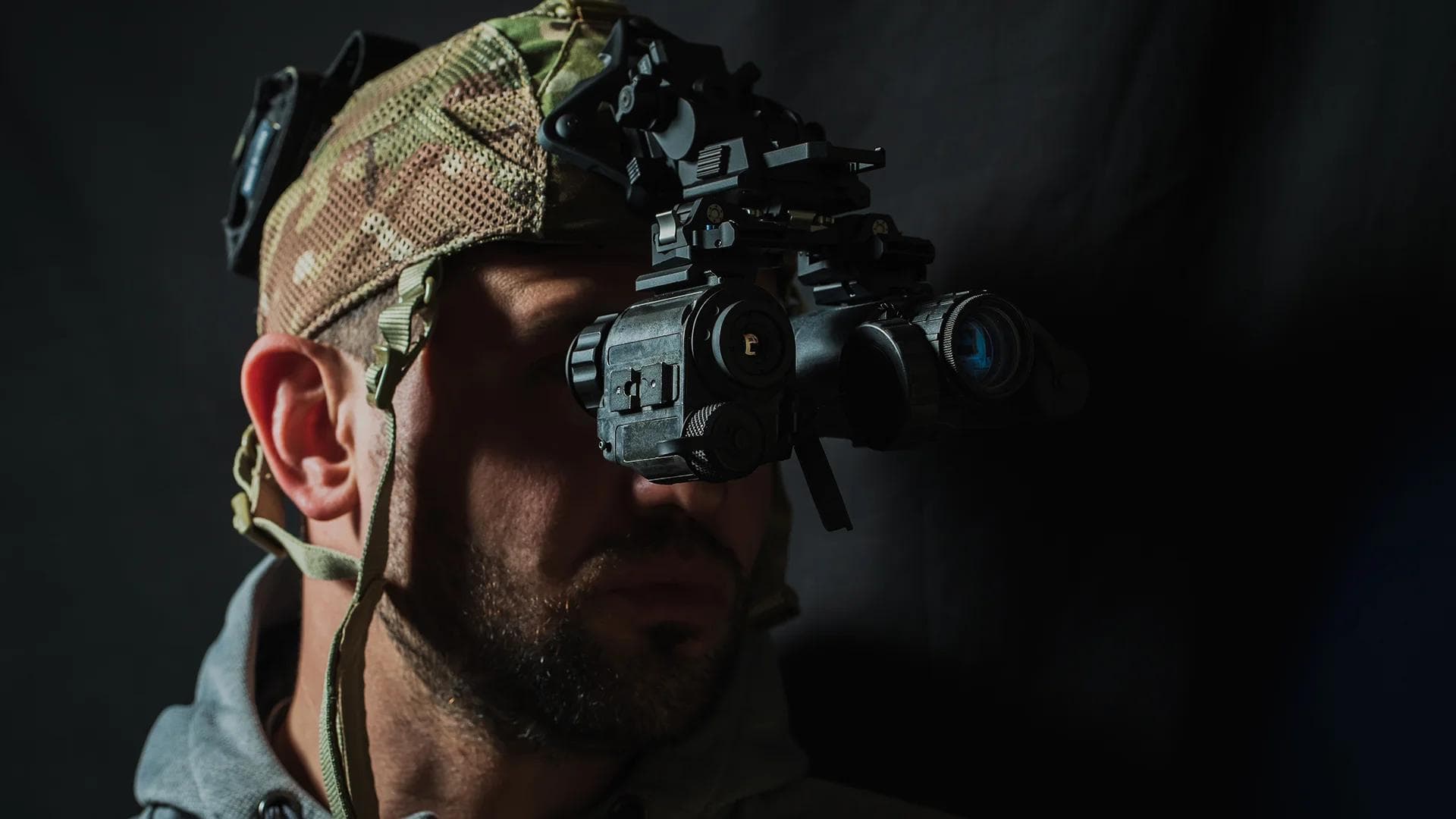
Night vision technology amplifies existing light, whether moonlight, starlight, or artificial light from surrounding areas. It uses light amplification to allow the user to see in low-light conditions. The light passes through a photocathode, which converts photons into electrons, and then through a microchannel plate (MCP), which amplifies the electrons. The amplified electrons are then converted back into visible light via a phosphor screen, providing the familiar green-tinted night vision image seen commonly in night vision goggles.
Night vision is effective in environments with some ambient light and can help you distinguish shapes, objects, and movement in low-light conditions.
Key Characteristics:
- Requires a level of ambient light to function.
- Amplifies visible light to create images.
- Works well in low light but struggles in complete darkness or inclement weather.
Thermal imaging detects the heat emitted by objects, animals, or people. Every object with a temperature above absolute zero emits infrared radiation, which thermal devices capture and convert into images. Unlike night vision, thermal does not rely on light, making it effective even in complete darkness or during the day.
Thermal imaging creates a heat signature of objects in its field of view, with warmer objects appearing brighter and cooler ones darker. This allows users to detect living creatures and heat sources through obstacles such as foliage, smoke, or fog.
Key Characteristics:
- Detects heat instead of visible light
- Works in complete darkness and inclement weather
- Effective at identifying living beings or heat sources through smoke, fog, or light foliage
- Often used in firefighting, law enforcement, and search-and-rescue missions
The Difference Between Night Vision and Thermal
Now that we understand how night vision and thermal imaging work, let’s compare their differences based on various factors that matter in tactical use.
Performance in Darkness:
- Night Vision: Night vision requires some amount of ambient light. Night vision scopes are only effective in pitch-black environments if paired with infrared illuminators—these illuminators project infrared light, which the night vision device can then amplify.
- Thermal Imaging: Thermal scopes do not rely on light, allowing them to function flawlessly in total darkness. As long as there’s a heat source present, you can detect it with thermal imaging.
Daytime Use:
- Night Vision: Night vision devices are generally unsuitable for daytime use, as bright light can damage the sensitive internal components. Although some devices have day/night functionality, they’re still primarily designed for low-light scenarios.
- Thermal Imaging: Thermal devices work perfectly in daylight, relying on heat detection rather than visible light. They can be used around the clock, making them more versatile for specific applications.
Image Clarity and Detail
- Night Vision: Night vision provides clearer images of faces, objects, and environments. It allows users to see more detailed surroundings, making identifying people, reading signs, and navigating in low-light conditions easier.
- Thermal Imaging: While thermal excels at detecting heat signatures, it struggles with finer details. A thermal image will highlight heat sources but won’t provide the same level of detail as night vision, particularly for identifying facial features or distinguishing objects.
Environmental Conditions:
- Night Vision: Night vision performance can degrade in certain weather conditions. Rain, fog, or heavy smoke can scatter the ambient light, making it harder for the device to amplify sufficient light for a clear image.
- Thermal Imaging: Thermal imaging performs better in adverse conditions like fog, smoke, or light rain. Since it’s heat-dependent, it’s less affected by visible light conditions. However, extreme temperatures or water vapor can sometimes reduce the range and accuracy of thermal detection.
Power Consumption:
- Night Vision: Night vision devices consume less power than thermal devices, especially models that do not use built-in infrared illuminators. This allows for longer battery life in the field.
- Thermal Imaging: Thermal devices require more power to run the internal sensors and processors, often leading to shorter battery life. However, newer thermal units are improving in terms of power efficiency.
Night Vision vs Thermal Imaging / Thermal Scopes: Which to Choose?
When comparing night vision vs thermal scopes, it’s essential to consider your specific needs and operational environment.
- For Hunting: Thermal scopes may be the better choice if you’re hunting in total darkness or need to detect animals hidden in foliage. However, if you’re navigating low-light conditions and need to spot and identify your target, night vision scopes offer better image clarity.
- For Tactical Operations: Thermal scopes are advantageous in environments with obstacles, such as urban areas with smoke or brush-filled landscapes. However, if detail and identification are crucial, night vision scopes might be more suitable.
Some advanced devices combine both technologies, offering thermal night vision capabilities. These hybrid systems aim to provide the best of both worlds by blending the detection power of thermal with the clarity of night vision. However, they are typically more expensive and specialized.
Ultimately, the best choice will depend on your operational needs, environment, and budget to round off the night vision vs. thermal debate. If you’re looking for expert advice and top-of-the-line NV/thermal gear, look no further than GPNVGs. Get the best night vision product for your needs by visiting our product page.